General News
4 November, 2025
Hopeful teacher hits roadblock
As the state tackles a dire teacher shortage, Melanie Barnes has been looking forward to taking on the profession locally. Now she fears her qualifications will no longer be recognised in Victoria.
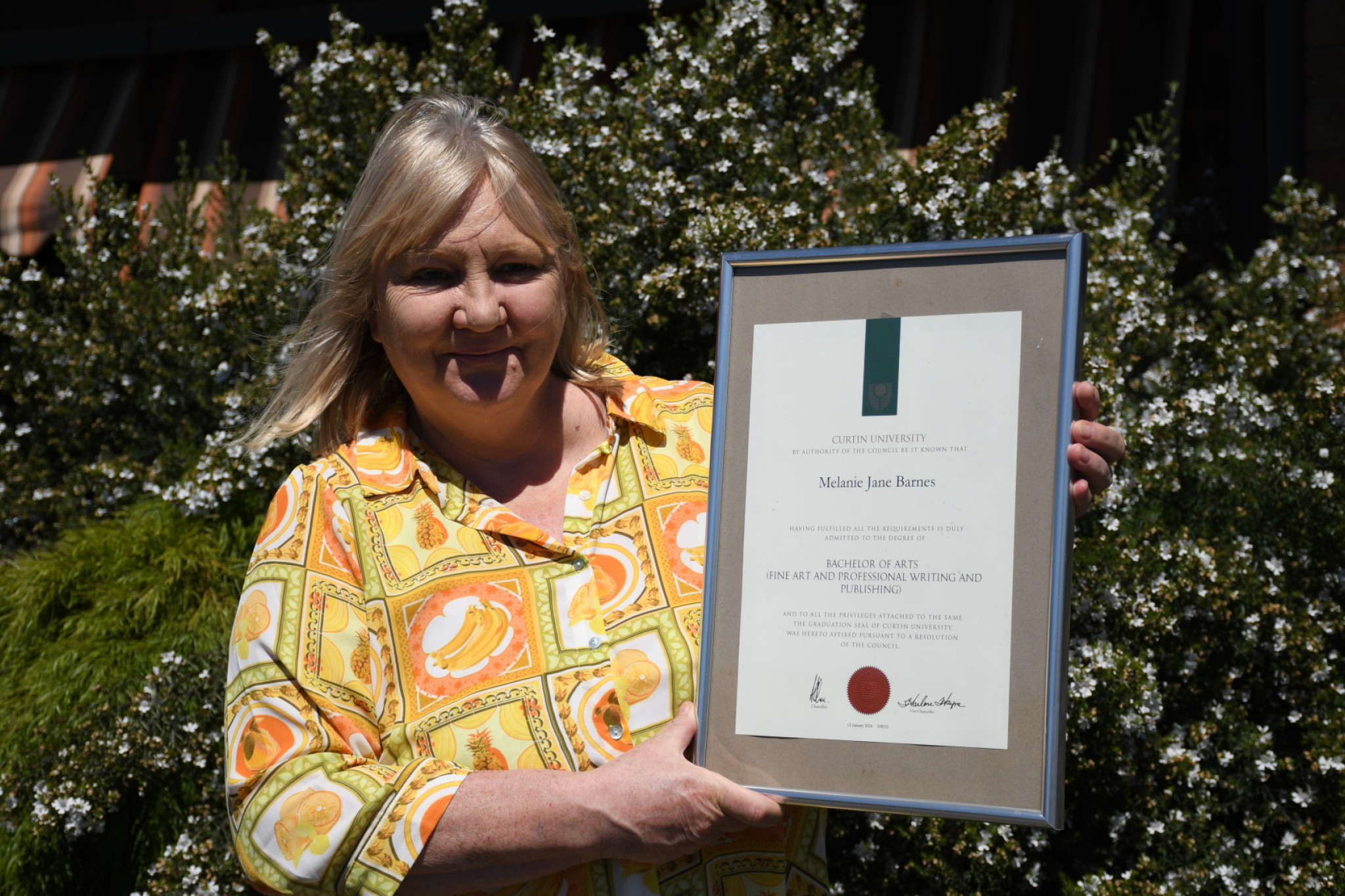
Halfway through her final year of study, the Maryborough local and mature-aged tertiary student was informed by the Victorian Institute of Teaching (VIT) that her qualifications would no longer be recognised in Victoria.
Earlier this year, Ms Barnes enrolled in a Graduate Diploma of Secondary Education, specialising in Art, through Curtin University — based in Western Australia, to become a secondary art teacher.
She said the decision to study at an interstate institution online meant she could work on the course flexibly in her own home, and commence further study after obtaining her bachelor’s degree there.
“I did my Bachelor of Arts through Curtin University, and when I finished that, I thought, ‘oh, I’ll see if I can enrol in a graduate diploma, so I looked around and it wasn’t offered at all,” she said.
“Last year, I discovered Curtin had it. I contacted a student liaison officer, who said it would allow me a job in Victoria, acknowledged by the government.”
Enthusiastic about educating local young people with her passion for the arts, Ms Barnes said the Graduate Diploma is still a thorough course that covers a wide variety of topics taken on before entering the classroom.
“We do three placements, we study diversity in pedagogy, behaviour management, digital technology, that’s a huge thing in schools now. It covers everything we need to go into teaching,” she said.
“It’s very involved, it’s post-grad, so of course it’s very involved.”
Despite being interstate, the university advised Ms Barnes that she would still be able to teach in Victoria.
However, halfway through the 12-month course, the Victorian Institute of Teaching changed its policy, no longer recognising her qualifications in the state of Victoria.
“I found out via an email, and the university seemed to appoint someone to be the contact and let everyone know,” she said.
In order to be qualified to work in Victoria, Ms Barnes was advised that she must undertake a Master’s degree.
“I’ve been pretty annoyed, the other students and I are all a bit confused, there’s not a lot of information, and I think they should have provided more information, not just the student liaison,” Ms Barnes said.
“I feel we student-teachers need to stand up for ourselves and say ‘no, we went in, in good faith’.”
She wants others in the community who wish to become teachers to ensure they don’t have the same issue.
“This change means only those with a minimum two-year post-grad teaching qualification are eligible for employment in Victorian government schools,” Ms Barnes said.
“The action was taken to ensure high-quality education and to align with national accreditation standards, which require a minimum of two years for a post-grad initial teacher education program. But to those who have already started, I don’t think it’s fair.
“I want to stay in Maryborough. I grew up here and always wanted to come back. I want to stay and that’s why I went into teaching. I thought that was somewhere I could get work.”
Ms Barnes has decided to divert to a two-year master’s degree, doubling her study time and significantly increasing her HECS debt. She feels the state is in desperate need of teachers, but questions why policy has prevented qualified people from entering the workforce.
“I’ve just said, ‘alright, I’ll do the masters’ because I feel like I have no choice. I didn’t want to give it all up, I wanted recognition of everything that I have already done,” Ms Barnes said.