General News
3 October, 2025
Farmers urged haystack safety
With hay season beginning in the west and north west parts of the state, farmers are being urged to take extra care in preventing haystack fires.
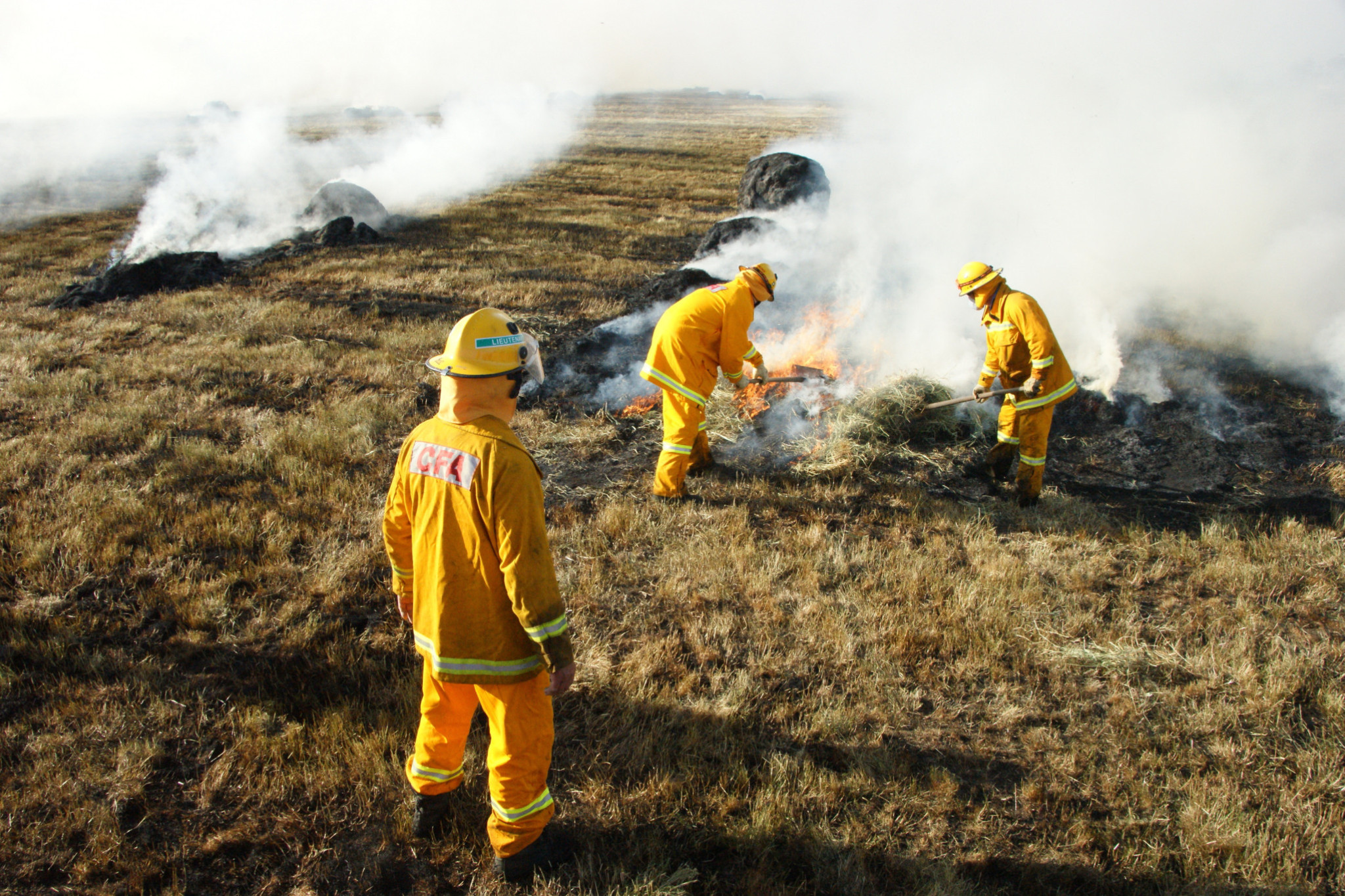
Between June 30, 2024, and July 1, 2025, CFA responded to 73 haystack and hay shed fires in regional areas, with 53 percent occurring in the west and northwest of the state.
Haystack fires are often caused by spontaneous combustion when hay is baled with excess moisture. High moisture levels, combined with the compact nature of hay bales, can create internal heat, leading to ignition.
David Manifold, Buloke West Group Officer and 3rd lieutenant of Jeffcott Fire Brigade said there are many factors which can lead to a haystack fire.
“What goes wrong is hay is baled at a high moisture, what we have learned in recent times is leaving the hay out for longer to dry can actually increase the growth of yeast and moulds on the hay,” he said.
“The yeast and mould levels can get so high that any ingression of water is as good as throwing a match on it.”
Mr Manifold said he is utilising both new and old technologies to reduce the risk of haystack fires at his farm.
“We are using new techniques on the machinery side to get our window shorter for bailing in sub seven days which is the key to keeping the yeasts and moulds lower,” he said.
“We run plastic over the flooring which stops moisture from coming up into the hay, preventing damage but also the risk of water ingression, particularly in heavy rainfall periods during summer.
“The spouts on the shed are well maintained, and the downpipes are key. Bunched up stacks are pretty volatile, keeping stacks well-ventilated is important.”
He also uses a new type of temperature probe that sends temperature data to a central bay station on the farm.
“I can check the temperature on an app on my phone at any given moment,” Mr Manifold said.
For more information, visit CFA’s website or contact your local CFA brigade for advice on haystack safety.